
Most guides to starting an online business in Nepal are written as if the hard part is the website. It is not. The website is an afternoon. The hard part is the six small decisions around it, each of which somebody will tell you is urgent and most of which are not.
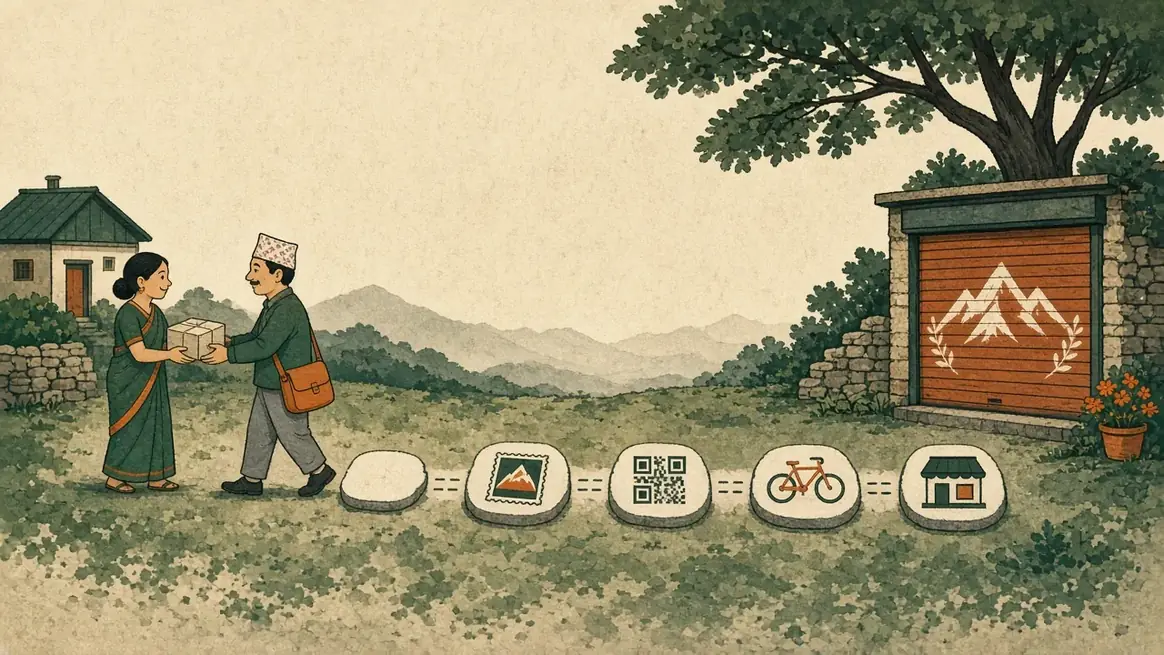
This is the order we would actually do them in, with the reasoning, and links to the longer version of each.
First, sell one thing to one person
Before a domain, before registration, before a logo. Find out whether anybody wants what you are selling, at the price you need, by selling it.
That sounds glib and it is the single biggest saver of money and months. A shop that has taken ten real orders knows what to build. A shop that has built for three months knows nothing and has spent everything.
WhatsApp and Instagram are fine for this. They are a terrible place to *stay*, for reasons we wrote up in WhatsApp is not a shop, but they are an excellent place to test.
Then work out whether you must register
This is the question that paralyses people, and the honest answer is that it depends on what and how much you are selling, and it is worth ten minutes rather than ten weeks.
The full version is here. The short version is that registration and a PAN become genuinely necessary sooner than most first-time sellers expect, particularly if you want a merchant QR or to invoice a business customer, and they are much less painful than the anxiety about them.
Then decide how you will be paid
Two decisions, not one.
The rail: a bank account and a QR that reaches the most people, compared in eSewa vs Khalti vs FonePay, with the setup route in FonePay QR for your shop.
And whether you take cash at the door, which in this market you almost certainly should. How to accept cash on delivery without losing money is the whole argument.
Get these two settled before you build a page, because they change what the page has to say.
Then work out how the box moves
The delivery decision shapes what you can promise, and a promise is the thing customers hold you to. Local by yourself, everything else by a courier, is where most small shops land. The questions worth asking a partner before you commit are in delivery partners in Nepal.
Only now, the shop itself
By this point you know what you sell, who buys it, how you get paid and how it travels. The page almost writes itself.
What it needs: a catalogue with real photographs, a price on every item, a way to order that does not require a conversation, and your own link. Photographs matter more than design and you already own the camera, which is the point of product photos on a phone.
What it costs is a fair question and the answer in Nepal has changed a lot; we set it out in what a shop website costs. A domain is a smaller job than it sounds, covered in how to get a domain in Nepal.
Pasal exists for this step and takes no commission on your sales, which is the full case, written by the people who built it and worth reading as such.
Then, and this is where most shops stop too early
The first version being live is not the end of the work, it is the start of the only work that compounds.
Know who came back. Most shops cannot name their tenth-best customer. Your shop already knows who its regulars are.
Give them a reason to. A discount buys one sale, a card buys a habit: a loyalty card beats cutting your price.
Do not sell what you do not have. The worst phone call in retail, and how to avoid it: never make it.
Close the day. Two minutes that turn an argument into a number: closing the day without arguing about it.
The honest summary
Sell something first. Register when it is actually needed rather than when you are anxious. Settle payment and delivery before you build, because they decide what the page promises. Then build the smallest real shop you can and spend the saved months on customers instead.
Nothing on that list requires a developer, a designer, or a loan. It requires deciding six things in an order that stops each one blocking the next. When you do build, what Pasal itself cost to build is why a product like this exists: the shop system is paid for once and split across every shutter that uses it.