
Ask a shopkeeper in Kalimati who their best customer is and you will get an answer within two seconds. It will be a description rather than a name. The aunty who buys in bulk on Saturdays. The hotel guy with the pickup. The nurse who comes after her night shift.
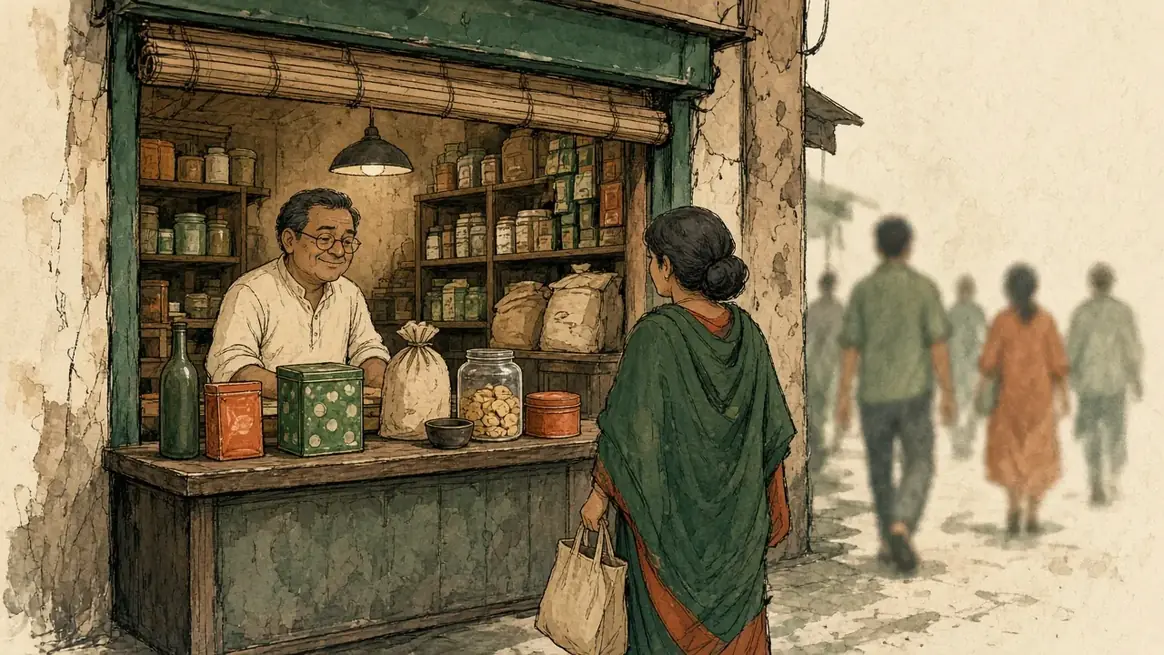
Ask for the second best and the answer slows down. Ask for the tenth and you get a shrug, which is fair, because nobody can hold that in their head while also running a shop.
This is the gap. Every shop has a top three it knows by sight and a long tail it cannot see at all. And the long tail is where most of the money is.
The till forgets on purpose
A cash sale is designed to be forgotten. Money in, goods out, no record of who. That is what makes it fast, and speed at the counter is not a small thing when there are four people waiting.
The cost shows up later, when you want to answer a question the shop cannot answer. Who has not been in for two months. Who used to buy weekly and stopped. Who spent Rs 40,000 with you last year without ever once being thanked for it. These are ordinary business questions and most small shops in Nepal simply cannot ask them, not because the owner is careless but because the information was never written down anywhere.
The paper khata is the exception, and it is worth noticing why. Shops keep meticulous records of credit, because credit hurts when you forget it. Nobody keeps records of loyalty, because forgetting it does not hurt today. It hurts slowly.
What changes when orders remember
In Pasal every paid order quietly builds a customer book. Nobody types anything extra. The order carries a name and a phone number because the sale needed them anyway, and the Customers tab collects the rest: what somebody has spent with you, every past invoice, and the points they have built up at one point per Rs 100.
That is a small mechanical thing that changes what you are able to notice.
You can see that the man who buys momos on Fridays has spent more this year than the wedding order you were so pleased about. You can see that a customer you think of as new has actually been coming for eight months. You can look up a phone number when somebody calls about an order from Ashar and have the whole history in front of you instead of asking them to describe what they bought.
None of that is analytics in the impressive sense. It is just memory, which the shop used to have only in the owner's head, and only for three people.
The three questions worth asking every month
You do not need a dashboard habit. You need three questions, once a month, at a quiet time.
Who spends the most. Not who orders most often, who actually spends. These are frequently different people and the second one usually gets all the attention because they are the ones you talk to.
Who has stopped. A customer who came four times and then vanished did not necessarily leave for a reason you can fix, but sometimes they did, and a phone call from the owner is a strong thing in a Nepali neighbourhood. Nobody expects it.
Who is close to a reward. If somebody is at eighty points and your reward is a hundred, that is a person who would come in this week if they knew. You know. They may not.
Knowing is not the same as rewarding
It is easy to slide from customer records into a loyalty scheme, and they are related, but they are not the same job and the first one is worth doing even if you never do the second.
Knowing who your regulars are changes how you buy stock, because you learn what your actual customers want rather than what you assumed. It changes how you staff a Saturday. It changes what you bother to photograph and put on the shop page. A shop that knows the hotel guy takes twelve kilos every Tuesday orders differently from a shop that hopes twelve kilos will move.
The loyalty card sits on top of that. Points accumulate whether or not you have designed a card, and you can set one up later. But the knowing comes first, and it comes free with selling.
Do not build a spreadsheet
The failure mode here is enthusiasm. Somebody reads a post like this, opens a spreadsheet, adds columns for birthday and preference and last contacted, fills it in beautifully for three weeks, and abandons it.
It is abandoned because it was a second job. Every record you have to maintain by hand is a record that will drift, and a customer list that is half wrong is worse than one you know is thin, because you stop trusting it and then you stop opening it.
The only customer records that survive in a small shop are the ones that write themselves out of work you were doing anyway. An order needs a phone number to be delivered. That is the whole entry cost. Everything else builds up from there without anybody remembering to keep it up.
The quiet advantage
There are four shops on your street selling roughly what you sell at roughly your price. You are not going to win on price, and you probably cannot win on range.
You can win on the fact that when a customer walks in, somebody knows who they are and what they usually take. That used to be the natural advantage of the small shop, back when a shop had two hundred customers and the owner stood at the counter for thirty years. It gets harder as you grow, and as staff turn over, and as more of your orders arrive through a phone from somebody you never see.
Keeping that advantage while you grow is mostly a matter of the shop remembering things the owner used to remember alone. That is not a feature. It is the point of writing anything down at all.
The tab this all lands on is documented in know your customers. Loyalty, the khata and the books read the same people, so a regular is not a different person in three notebooks.