
The first order you get from outside your own neighbourhood is a good day. Then you have to work out how to get a box to Butwal.
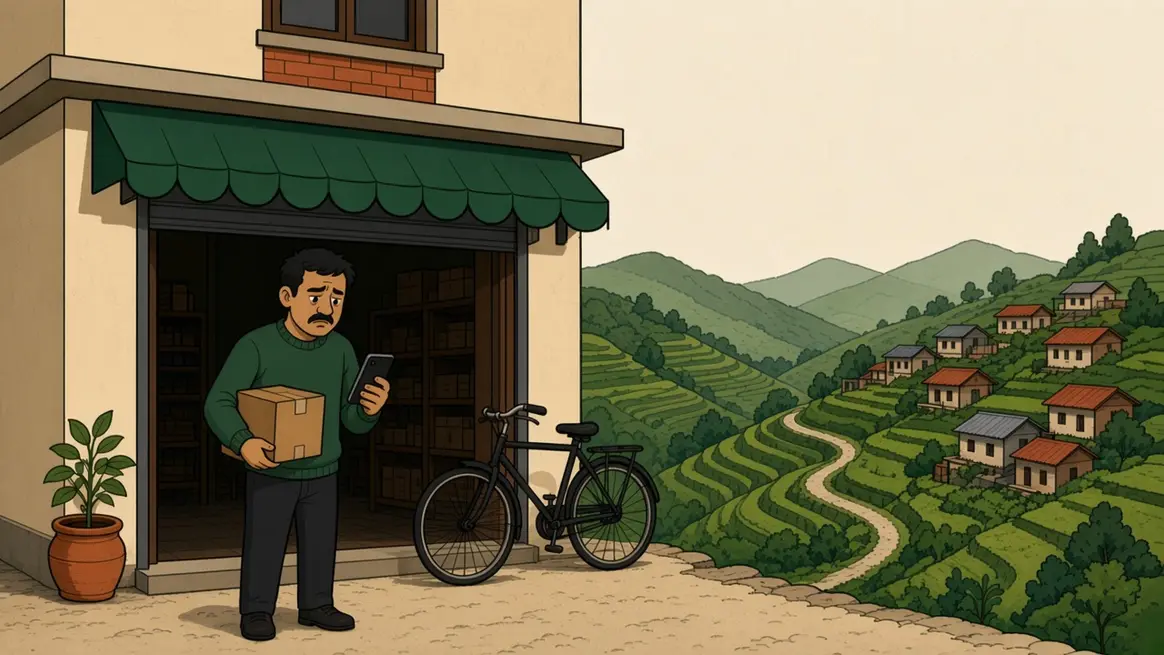
Most shops discover the delivery question the way they discover the stock question: from a customer, at the worst moment. Somebody in Pokhara orders, and you are standing in your shop holding a parcel and a phone, googling.
This is a decision worth making before it is urgent, because the answer changes what you can promise on your shop page, and a promise you cannot keep is worse than a slower one you can.
Three shapes, and most shops end up with two of them
Yourself, or a boy on a bike. Inside your own city, for a small radius, nothing beats it. You control the timing, you keep the whole delivery fee, and the customer sees somebody from your shop. It stops working the moment the radius grows or the volume does, and it stops working entirely the day that one person is unwell.
A courier or logistics partner. The obvious answer for anything beyond your city, and increasingly inside it too. You hand over a parcel, they move it, you get a tracking number. What you buy is reach; what you give up is the last conversation with the customer, and some control over how the box is treated.
The platform's own rider network. If you already sell through a marketplace, its delivery is right there. It is the easiest to start and the hardest to leave, because the customer belongs to the platform rather than to you, and the fee comes off every order forever.
Most small shops in Nepal settle on the first for local and the second for everything else. That is a sensible place to land.
The questions that actually decide it
Do not start with price. Start with these, and get the answers from the partner rather than from a friend of a friend.
Where do you actually reach, and how long does it really take? Coverage maps and real delivery times are different documents. Ask specifically about the districts your customers are in, not the country.
Do you collect cash on delivery, and when do I get it? This is the one that catches shops out. A courier that collects COD is holding your money, and the gap between delivery and settlement is working capital you do not have.
What happens when a parcel is refused, lost or broken? Ask for the process, not the promise. Who pays the return leg, how long a claim takes, and what evidence you need to have kept.
What do I have to do to hand over a parcel? Some want a booking in a portal, some want a sticker, some send a rider. This is the part that becomes your daily routine, so it matters more than the rate card.
We are not printing rates or coverage tables here, deliberately. They change, they vary by volume and by account, and a stale number in a blog post is exactly the thing that makes somebody promise a customer two days when it is five. Ask, and write down what you are told.
What to promise on your shop page
Whatever you promise, promise the slow version. A shop that says three to five days and arrives in two has a delighted customer. A shop that says two and arrives in four has a support problem and a review.
Say where you deliver, in plain place names rather than a radius in kilometres. Say what it costs, or say it is free over an amount, because a delivery fee that appears at the end is the single commonest reason a full basket is abandoned. And if there is somewhere you do not deliver, say that too. A clear no on the page is cheaper than a phone call later.
Where Pasal fits
Pasal does not deliver anything and does not resell a courier. What it does is make the handover less manual.
An order arrives with the address and phone already attached, so there is nothing to retype into a booking form. Once you have a tracking number, it goes on the order, and the customer can see it from the same link they used to buy. Your delivery fee, your free-over amount and the areas you cover are yours to set, and they print on the shop page and the invoice rather than living in your head.
That is the whole claim. The parcel is still yours to move.
Start smaller than you think
You do not need a logistics strategy. You need to know, this week, who you can reach and what you will say on the page.
Pick one partner for outside your city and use them for a month before you compare. Deliver locally yourself while the volume is small, because the conversations you have at the door are worth more than the hour they cost. And keep the promise on your page one notch slower than your best case.
If you are still deciding whether to sell on your own site or through a marketplace at all, that trade-off is here. And if you are working out how to take the money as well as move the box, we compared eSewa, Khalti and FonePay.
Setting your own areas, fees and free-over amount is delivery rules in the help centre. That lives on the same shop as the catalogue and the till, so the promise on the page is the same promise at the counter.