
IRD status, checked 8 October 2026: Pasal software approval is pending. A PAN, VAT line or invoice number does not make its output an IRD-approved electronic bill. Use an enlisted billing system with your required business permission for legal e-billing. Pasal’s IRD connection is Off/Test only. Read the requirements and where Pasal fits.
IRD अवस्था: Pasal को स्वीकृति अझै प्राप्त भएको छैन। PAN, VAT वा बिल नम्बर छापिँदैमा स्वीकृत विद्युतीय बीजक हुँदैन। कानूनी विद्युतीय बिलिङका लागि सूचीकृत प्रणाली र व्यवसायको अनुमति प्रयोग गर्नुहोस्। Pasal को IRD सुविधा Off/Test मा मात्र छ।
The demo in the New Road shop lasts twenty minutes and the quote arrives with three lines: the licence, the annual maintenance, and the training day. The machine is fine. The question the owner takes home is different: how many separate systems is this counter going to need, and how many renewals will chase it?
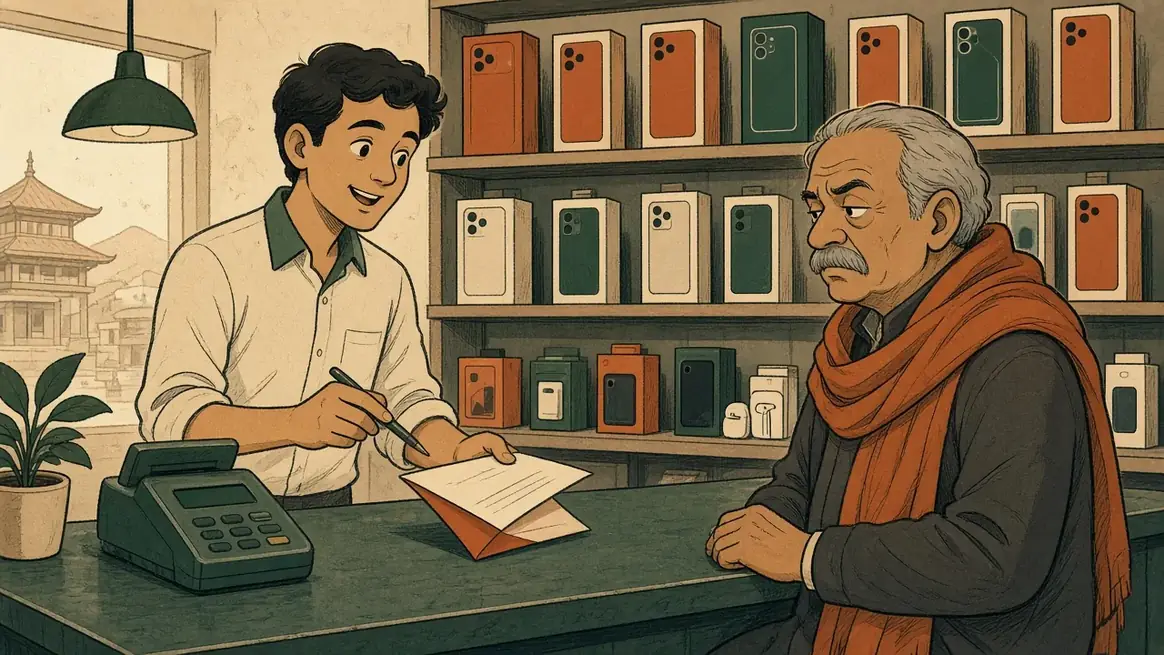
Billing software in Nepal is usually sold that way, as its own product beside the shop rather than part of it. Before comparing prices, it is worth writing down what the counter actually has to do.
The seven jobs of a counter
Ring a sale fast. A queue forgives nothing. The till has to find the product quicker than a person can, by a tap, by a USB barcode gun, or by the phone's own camera.
Hold a bill. Somebody always steps out to the ATM mid-sale. A held bill waits without blocking the queue.
Take the money the way it comes. Cash with the change worked out, eSewa or Khalti by QR, and a card left to the bank machine beside the drawer.
Issue the correct document. A counter needs readable records and the billing arrangement required for the business. For electronic tax bills, use enlisted software with the required business permission. Pasal's receipt and management output is not proof of an approved electronic bill while its approval is pending.
Close the day. Count the drawer against what the till already knows, and be told the difference by name. On Pasal this is about two minutes.
Count the stock down. A sale should take one off the shelf by itself, and the shop page should stop selling what the counter just sold out.
Keep the regulars' book. Udharo is how half the country's counters run. A credit line that follows the customer, not the page it was written on.
What it usually costs, and what it costs here
Standalone POS packages are quoted per counter, per year, with maintenance on top, and the khata and the online shop are somebody else's products again. Use your own quotes here; they vary too much for a round number to be honest.
On Pasal the counter is not a separate product. The till, the bills, the khata, the day's closing and the stock counts all sit inside Pro, which was NPR 2,000 a month as this was written, or NPR 18,000 a year, alongside the shop itself, the order board and the QR ordering. One price, one renewal, one place your data lives. Staff, payslips and the accountant pack sit in that same Pro price. Every new shop opens on Pro free for 7 days, and the pricing page always carries the current figure.
| Line | Price |
|---|---|
| Pasal Pro, monthly | NPR 2,000 |
| Pasal Pro, yearly | NPR 18,000 |
Two details matter more at a real counter than on any brochure. The till keeps selling when the wifi dies: sales queue on the device and replay when the connection returns, without ringing anything twice. And the counter is honest about haggling, because that is how a counter works here: a discount is typed in the open and shown on the bill, not hidden in a rounded total.
The trade-offs, told straight
The counter tools need Pro, so a shop that only wants the free online shopfront does not get a till with it. The hardware is a phone or tablet you already own, and a printer is optional rather than assumed: every sale has a digital receipt the counter can show on screen, and the customer keeps a copy in their email and in their account. The camera reads barcodes on Android phones today and is newest on iPhone, so if yours misbehaves, a USB gun always works. Pasal exports management records, but does not file your VAT return or currently replace an approved electronic tax-billing system. Keep that billing arrangement and reconcile it with your accountant.
If the seven jobs above look like your counter, walk through the demo shops, then open your own; the till is inside your 7 free days. Bring your old quote along and cross the lines off one by one.