
A cafe does not have a feature problem. It has a walk. The order starts at the table, the kitchen has to see it, the counter has to know what is still unpaid, and the payment has to close that sitting rather than start a second bill with the same momo on it.
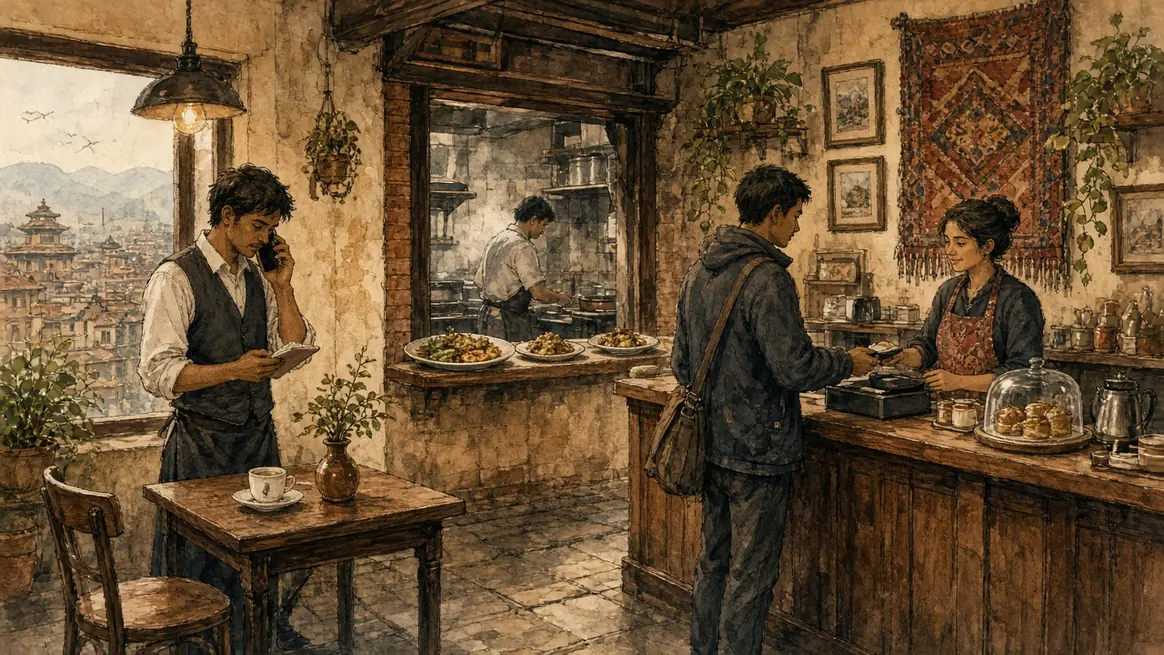
At the table
The guest scans the QR on that table and orders on their phone. The ticket arrives with the table on it, not as a nameless WhatsApp message. Staff can also add a round from the counter and send it to the same seat. A free table is a place you can aim an order. An occupied table is a bill that already exists.
In the kitchen, and on the board
The order shows up on the board the moment it is placed. Received, packing, ready: the kitchen is moving a ticket, not a chat thread. Two rounds at Table 2 are still one sitting. They are not two customers called Walk-in who happen to share a number.
At the counter
Paying an occupied table means loading that sitting onto the current bill. The lines are the food they ordered. Service and VAT, if this shop charges them, are already inside the total rather than added a second time at the till. Take payment marks those orders paid. It does not ring a fresh counter sale on top of them, which would count the stock down twice and the money twice.
Clearing the table is a different verb. It resets the guest QR so the next party does not see the last party's food. It does not collect the money. An unpaid ticket should be settled, not cleared.
After the money
Cash, a QR, or a mix. The bill they are given is a PAN bill or a VAT bill only when this shop is allowed to issue one. Otherwise it is a payment receipt that says so. The same document can sit on the screen and, if you want, on a roll.
The guest side is a QR code per table. The staff side is table bills. The hardware under the counter is what that POS costs.