
The question arrives the week before someone switches payments on. "Can we just use yours?" Ours would be the comfortable answer and the wrong one. If every customer's payment landed in Pasal's account, Pasal would be a payment company, your books would show a transfer from us instead of a sale, and a refund would be our problem. That is not what a shop system is for.
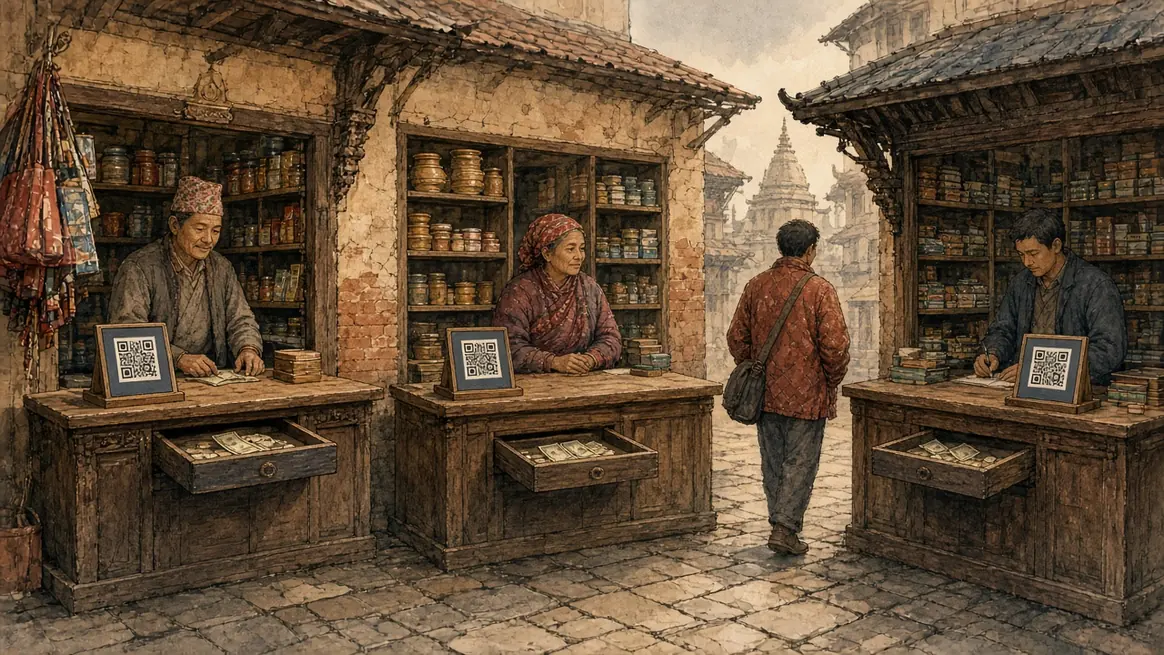
You can open on a personal QR
Most counters in Nepal already do. A personal eSewa, Khalti or mobile-banking code can go on the shop page today, labelled as yours. The help centre says so, and it is the right week-one move, because sales should not wait on a form.
The limits show up later. The name on the customer's screen is your name, not the shop's. Personal wallets cap how much they will receive. At tax time the statement is a mix of household transfers and the till. A merchant account is the upgrade that fixes those three, not the ticket you need before the first sale.
You do not need all three
Fonepay is a rail between banks. eSewa and Khalti are wallets. A Fonepay merchant QR from your own bank is the one sticker most apps can already scan, and the money arrives in the bank rather than in a balance you must remember to withdraw. Add a wallet when customers ask for that name at the counter. Collecting every logo on the wall is how a till ends up with three curling stickers and no idea which statement to check at night.
The papers are ordinary: a PAN or a ward registration, citizenship, a bank account for settlement, and often a photo of the shutter. Fees and how many days until the money lands differ by bank and by volume. Ask, and write down what you are told. We are not going to invent a rate.
Why the software company should not be your merchant
A marketplace that takes the payment and later settles you is holding your working capital and charging for the privilege. A shop system that did the same would have copied the part of a marketplace that shops are trying to leave. Your Fonepay, your eSewa, your Khalti: the customer pays you. Pasal shows the code, keeps the order and the reference together, and leaves the mark-paid step with the person who can see the statement.
Where each code comes from is Get a merchant QR. Which rail to lead with is eSewa vs Khalti vs Fonepay.