
The owner wants one stand on the table that does everything: join the wifi, open the menu, order the chiya. Phones do not work that way, and the shops that print a single magic square usually get a code that does the first job and forgets the second.
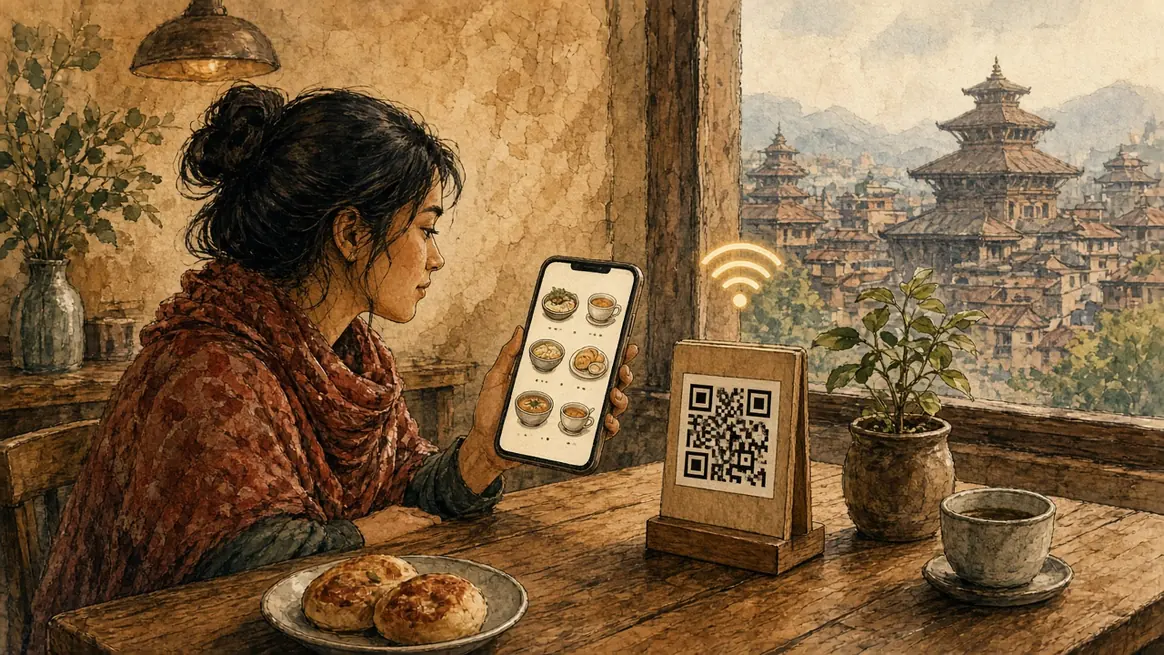
Two different codes
A wifi QR is a small instruction to the phone: this network, this password, join it. When it works, the phone joins and the camera app is done. It does not open your menu afterwards. A menu QR is a link. It opens a page. It cannot flip the wifi on, because a web page is not allowed to type your password into the phone's settings.
So one square cannot be both instructions. Anyone who sells you that square is hoping the customer's phone will guess.
The stand that still feels like one
Put the menu on the stand. The table QR opens that table's order page, which is the thing they came to do. On that page, or on a card next to the stand, show the network name and the password in type a person can read, and offer a separate wifi QR for the people who like scanning. Two squares on one piece of wood is honest. One square that only joins the wifi leaves them online with nothing to order.
Guest wifi should not be the till's wifi. The till can survive a dead line for a sale. It should not share a password with every table. When you change the guest password, change the card. The table QR does not need to change, because it was never the password.
How a table QR becomes an order is a QR code per table, and the path from that order to the money is table, kitchen, counter, payment.